· Marcus Delgado · Field Reports · 15 min read
The Hidden Cost of Disconnected Recruiting Tools for Seattle Staffing Agencies (2026)
Most Seattle staffing desks already own an ATS — and still lose hours a day to spreadsheets, re-keyed data, and tools that don't talk. Here's what that tool sprawl actually costs, and when custom recruiting software you own pays for itself.
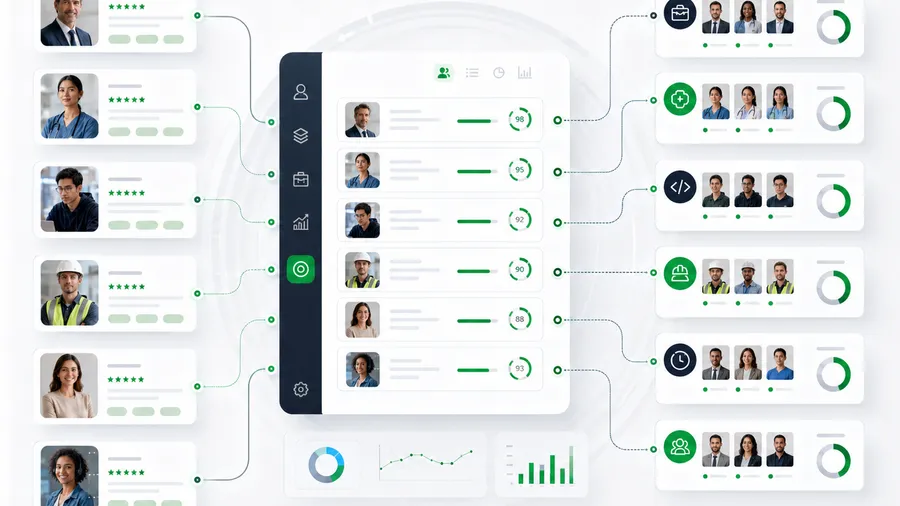
Short answer: for most Seattle staffing agencies, the problem was never “we don’t have recruiting software” — it’s that the software is scattered across five tools that don’t talk to each other, so recruiters re-key the same candidate into a spreadsheet, an ATS, a job board, and an email thread, and the desk quietly loses hours a day to work no one is paid to do. An off-the-shelf ATS fixes the filing cabinet; it doesn’t fix the sprawl, the per-seat tax, or the missing candidate and client portal. This is a field report on what that disconnect actually costs a Seattle desk in 2026 — with sourced numbers — and an honest look at when custom recruiting software you own is worth building, and when it isn’t.
Key takeaways
- You already have software — that’s the trap. As of the 2026 usage report, 93% of recruiters use an applicant tracking system (Bullhorn, 2026 ATS Usage Report). The question isn’t whether to use one; it’s whether yours fits your desk or fights it.
- Disconnected tools are expensive. Poor data quality — the direct byproduct of the same candidate living in five systems that don’t agree — costs organizations an average of $12.9 million a year (Gartner). Most of that bleeds out slowly, not in one dramatic failure.
- Integration is a placement lever. Recruiting teams on an integrated tech stack fill roles about 32% faster than teams juggling disconnected apps (Pin, Recruiting Tech Stack Report 2026).
- Toggling is a tax. Knowledge workers switch between applications roughly 1,200 times a day and lose close to 9% of the workday just re-orienting after each switch (Harvard Business Review, 2022).
- Time-to-fill is already rising. The U.S. average sits near 44 days and has climbed roughly 24% since 2021 (SHRM 2025 Benchmarking; Mitratech). Tool drag makes it worse.
- Custom software isn’t for everyone. Below a certain volume, a well-configured GoHighLevel snapshot beats a bespoke build. Above it, owning your system ends the per-seat tax and models your desk exactly.
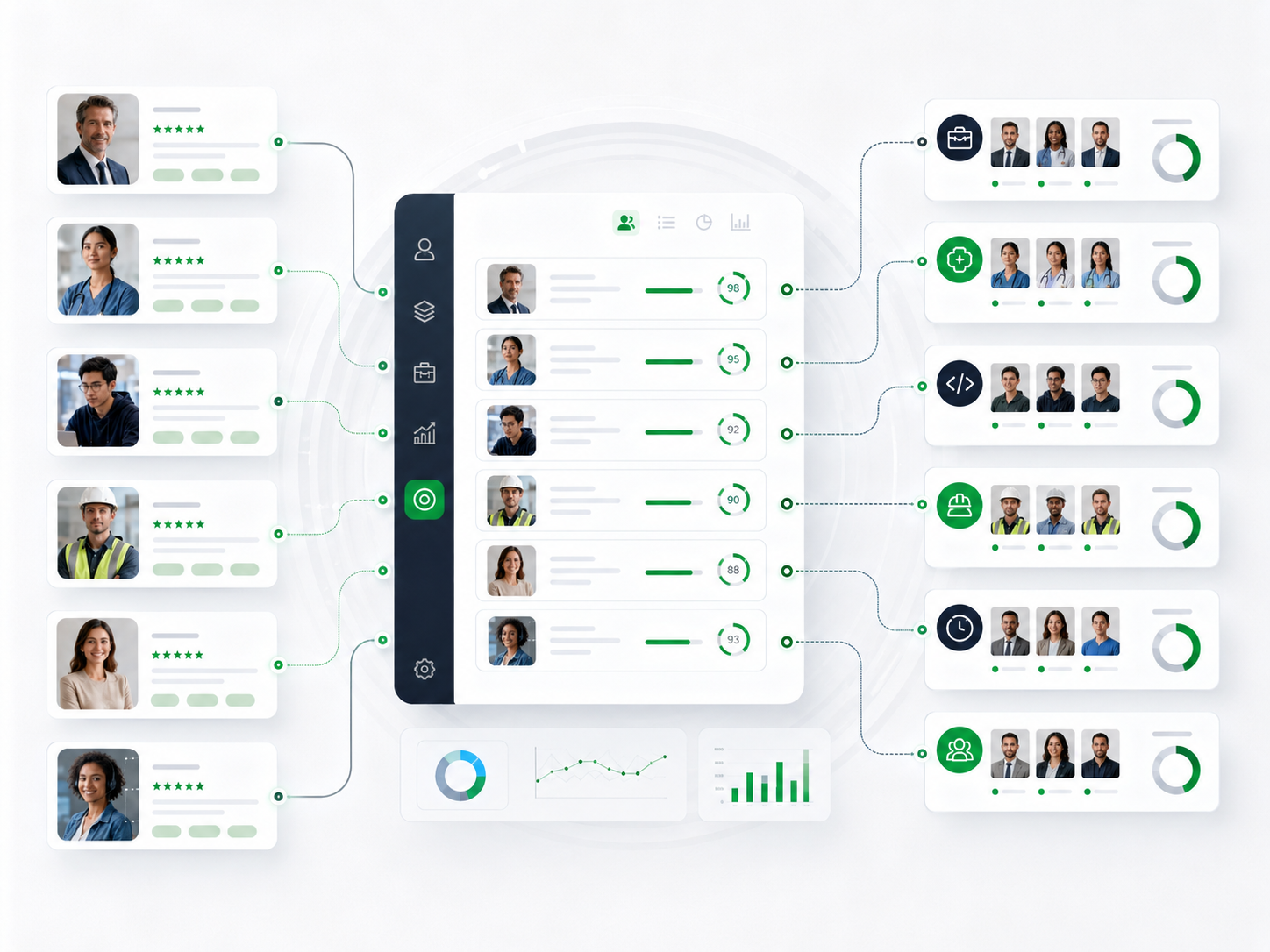
Table of contents
- Why Seattle desks feel this first
- The real problem isn’t “no software”
- The hidden costs, quantified
- Five things an off-the-shelf ATS can’t fix
- Off-the-shelf ATS vs. custom software
- What “custom recruiting software” actually means
- When it’s worth it — and when it isn’t
- How to start without ripping everything out
- FAQ
Why Seattle desks feel this first
Seattle is a systems town, and its labor market punishes slow, sloppy pipelines. Workers in the Seattle–Tacoma–Bellevue metro earn a mean of $44.13 an hour versus $33.54 nationally, and computer-and-mathematical occupations make up 9.3% of area employment — one of the highest concentrations in the country (U.S. Bureau of Labor Statistics, May 2025). Healthcare is the other engine, led by the region’s big hospital systems and biotech.
For a staffing agency, that mix means two things. First, your candidates — software engineers, cloud architects, travel nurses, med-techs — are scarce, expensive, and courted by everyone. Second, your clients are technical buyers who expect a submittal in hours, not days, and a status update without having to email you for it. A desk running on spreadsheets and disconnected tools can’t move at that speed, and in Seattle the gap shows up fast: the candidate you were still copying into your ATS took the offer from the agency whose system already booked the interview.
That’s the setup for the rest of this report. The tooling problem isn’t unique to Seattle — but a high-wage, tech-literate, healthcare-heavy market is where the cost of getting it wrong compounds fastest.
The real problem isn’t “no software”
Here’s the counterintuitive part. Almost every agency reading this already bought the software. 93% of recruiters report using an ATS (Bullhorn, 2026 ATS Usage Report). The market is enormous and still growing — adoption is effectively universal for any desk with real placement volume.
So if everyone has an ATS, why does the work still feel like manual labor? Because the ATS is one island in an archipelago. The typical recruiting operation runs a stack of roughly 16 HR and recruiting applications, and a large share of teams juggle four or more distinct recruiting tools day to day (Pin, Recruiting Tech Stack Report 2026). The same candidate lives in Bullhorn and a job board and a LinkedIn Recruiter tab and a shared spreadsheet and three email threads — and none of them agree on that candidate’s current status, phone number, or last contact date.
The result is a desk where the real job — talking to candidates and clients — gets crowded out by the shadow job of keeping five systems in sync by hand. That shadow job has a name in the productivity research: toggling. Knowledge workers switch between applications about 1,200 times a day and lose nearly 9% of the workday to the re-orientation cost of each switch — close to a half-day every week (Harvard Business Review, 2022). On a recruiting desk, that half-day is submittals not sent.
The hidden costs, quantified
Tool sprawl doesn’t send you an invoice. It bleeds you in four line items you never see itemized.
1. Bad data. When the same record lives in five places, they drift apart, and decisions get made on the wrong version. Gartner pegs the average cost of poor data quality at $12.9 million a year per organization (Gartner). Scale that down to a staffing desk and it looks like: texting a candidate who was placed last week, submitting a stale résumé, or missing a redeployment because the “available” flag lived in a spreadsheet the recruiter forgot to update.
2. Lost recruiter hours. Every re-key, every copy-paste between tools, every “let me check which system has the latest” is unbilled time. The toggling tax above (≈9% of the workweek) is the floor, not the ceiling.
3. Slower time-to-fill. Speed is the whole game in staffing, and it’s getting harder to win. The U.S. average time-to-fill now sits near 44 days, up about 24% since 2021, with technology roles averaging closer to 62 days (SHRM 2025; Mitratech). Teams on an integrated stack fill roles about 32% faster than those on disconnected apps (Pin, 2026). In a market where the first agency to respond usually wins — contacting a lead within five minutes instead of thirty makes you 21x more likely to qualify it (Lead Response Management study) — every day of tool-induced drag is placements handed to a faster competitor.
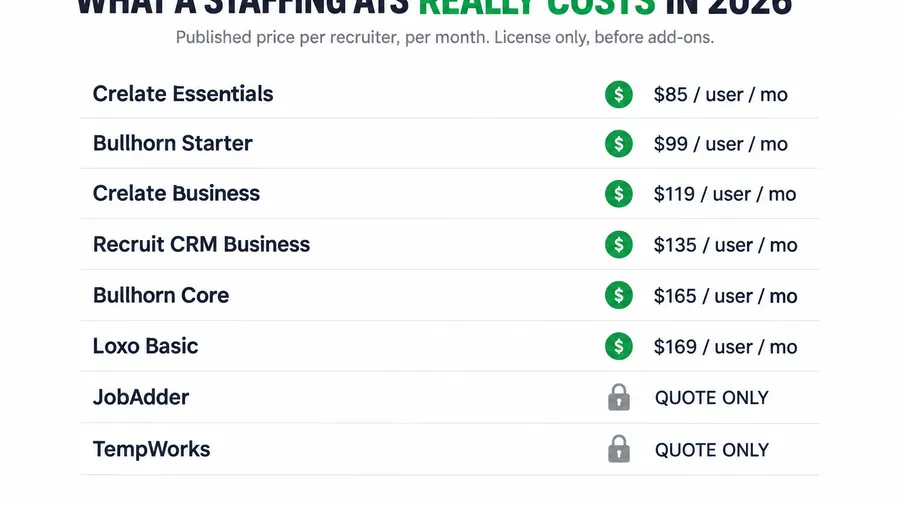
4. The per-seat tax. Most off-the-shelf recruiting platforms charge per user, per month, forever. Growth is punished: every recruiter you add raises the bill, and you’re often still missing the one workflow you actually need. You rent features you never touch and pay again every renewal.
None of these four show up as a line on your P&L. Together they’re often the biggest cost center on the desk.
Five things an off-the-shelf ATS can’t fix
A generic ATS is built for everyone, which means it’s built for no one in particular — and there are specific gaps a boxed product structurally cannot close:
- It doesn’t fit how you recruit. You bend your niche, your stages, and your pay-and-bill logic to fit the tool’s screens, instead of the tool fitting your desk. The one workflow you truly need is usually the one it can’t model.
- There’s no candidate or client portal. Candidates chase you for status; hiring managers email spreadsheets back and forth. Without a branded portal, every status update is a manual touch and every delay costs a placement.
- Your data stays scattered. The ATS is just one more island. It rarely unifies your job boards, VMS, LinkedIn, and spreadsheets into one source of truth — so reporting stays guesswork.
- AI add-ons are generic. Bolt-on AI doesn’t know your roles, your pay bands, or your screening rules. It’s a demo feature, not a system trained on your placement history and wired into your actual pipeline.
- You never own it. You rent it per seat. Cancel, and you walk away with nothing — no code, no IP, no system. The years of process you encoded into it belong to the vendor.
This is exactly the gap our custom software service is built to close, and where a well-built GoHighLevel ATS and recruiting pipeline already does most of the job for smaller desks without a bespoke build.
Off-the-shelf ATS vs. custom software
The choice isn’t “software vs. no software.” It’s “a box you rent and fight” vs. “a system you own and shape.” Here’s the honest side-by-side.
| What your desk needs | Off-the-shelf ATS | Custom software (you own it) |
|---|---|---|
| Fits your exact niche & pipeline | ❌ You bend to fit it | ✅ Modeled on your desk |
| Per-seat billing as you grow | ❌ Yes, forever | ✅ No — you own it |
| Branded candidate & client portal | ❌ Rarely | ✅ Built in |
| Unifies data across all your tools | ❌ One more island | ✅ One source of truth |
| Custom AI trained on your roles | ❌ Generic add-on | ✅ Wired to your pipeline |
| You own the code & full IP | ❌ You rent it | ✅ Full IP transfer |
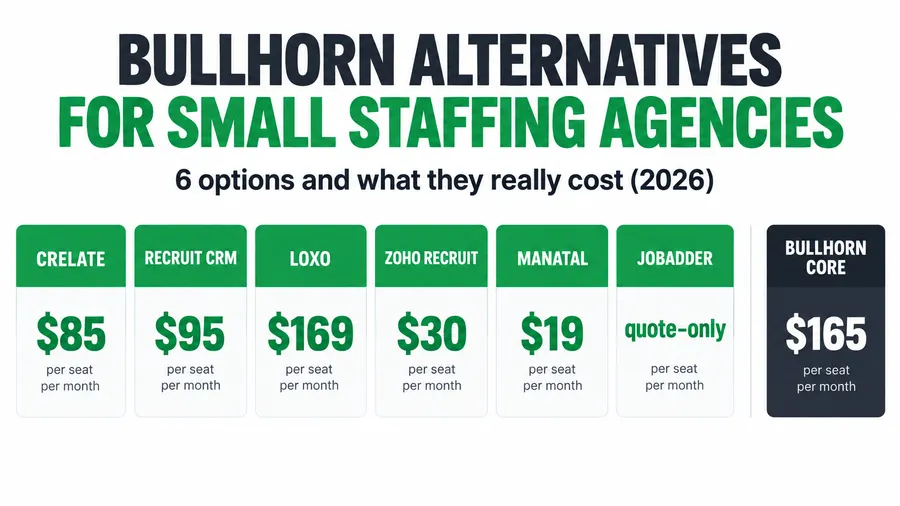
To put it plainly: an off-the-shelf ATS is the right first move for a new desk and a genuine upgrade over spreadsheets. But it caps out. Once your process is specific enough that you’re paying people to work around the software, the math flips — the tool is now a cost, not a lever. That’s the moment custom software modeled on your exact desk starts paying for itself. We’ll also happily extend Bullhorn, JobAdder, Crelate, Ceipal, or Loxo rather than replace them if you’d rather keep the system of record you have.
What “custom recruiting software” actually means
“Custom software” sounds like a two-year, seven-figure moonshot. For a staffing desk it usually isn’t. In practice it’s one or more of these, built to fit and owned by you:
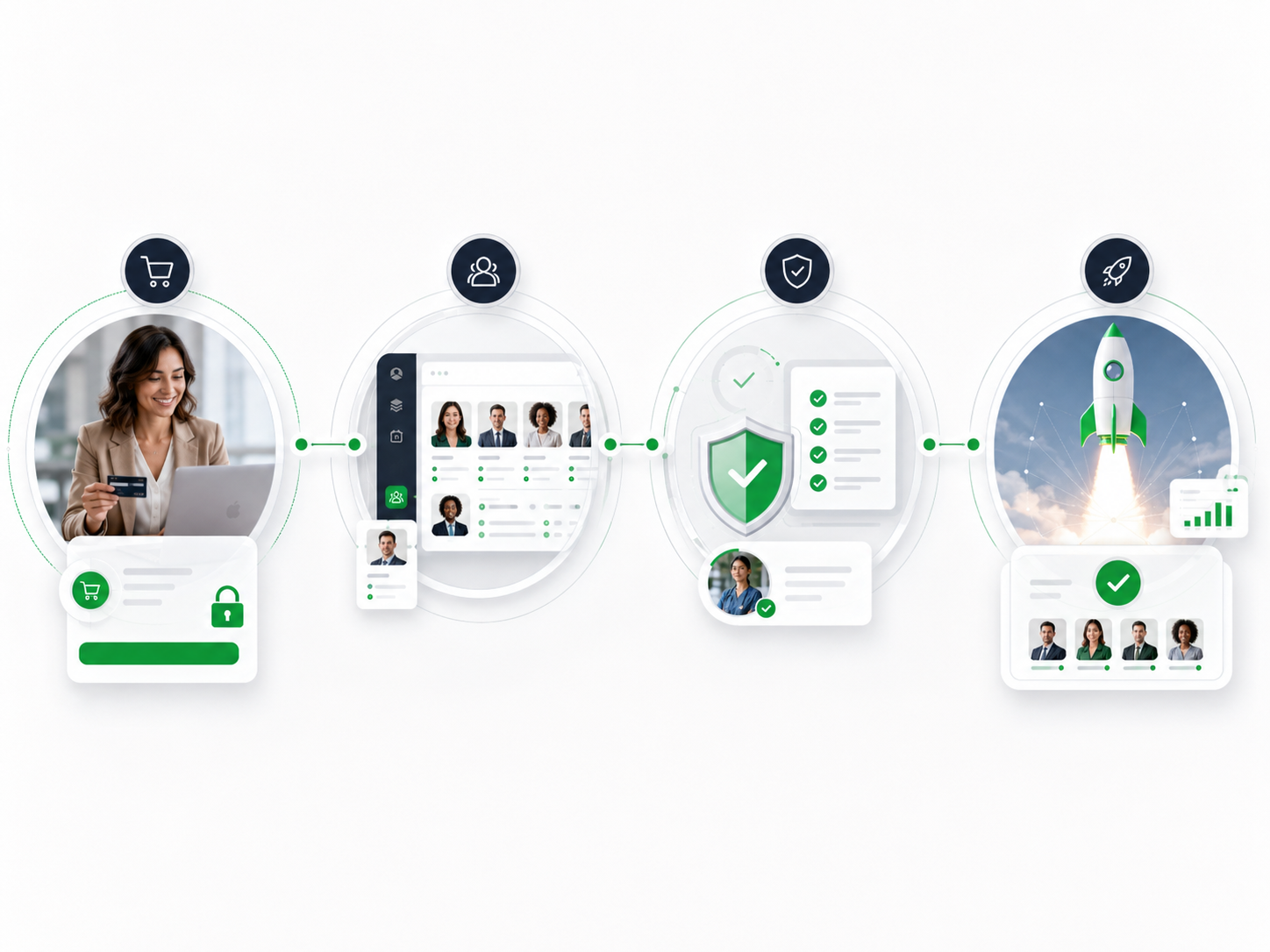
- A custom ATS/CRM for your niche — your pipeline stages, your pay-and-bill logic, your compliance rules (TCPA consent, EEOC fairness, FCRA background flows) modeled directly, not bolted on. You own it outright, with no per-seat tax.
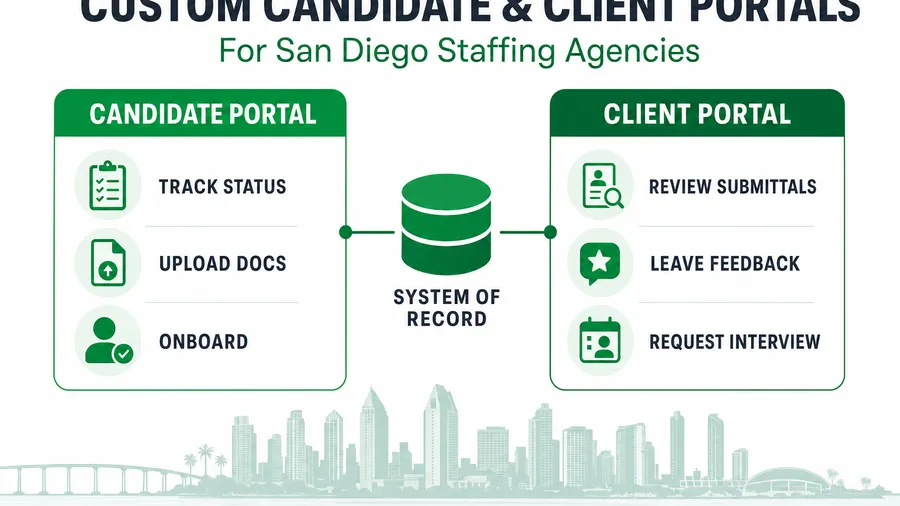
- Branded candidate and client portals — candidates track application status and upload documents; hiring managers review submitted candidates, leave feedback, and request interviews. No more email tag, no more “any update?” texts.
- One source of truth — integrations that pull Bullhorn, job boards, LinkedIn, your VMS, and spreadsheets into a single record, so reporting is fact, not guesswork, and recruiters stop re-keying.
- A custom AI recruiter agent — trained on your roles, pay bands, and screening rules, wired into your real pipeline, so it qualifies and schedules the way your best recruiter would.
- Placement and commission dashboards — the numbers an operator actually runs on (fill rate, time-to-fill, redeploys, gross margin per requisition), live.
Because you own the code, there’s full IP transfer, no per-seat billing, and you can extend it forever. It’s the difference between renting a suit that almost fits and owning one cut to measure.
When it’s worth it — and when it isn’t
We name limits honestly, because pointing a bespoke build at the wrong problem is how software gets abandoned.
Custom software is probably not worth it yet if: you’re a newer or lower-volume desk, your process is still changing month to month, or an off-the-shelf ATS genuinely covers 90% of what you do. In that case, don’t build — configure. A well-built GoHighLevel snapshot plus a fast prebuilt website will out-perform a half-finished custom system for a fraction of the cost and time, and it deploys in days.
Custom software starts paying for itself when: you’re paying recruiters to work around your tools, the per-seat bill is climbing as you grow, you need a portal or workflow no vendor offers, your data is scattered enough that reporting is a monthly fire drill, or you want to own a system as an asset instead of renting one. That’s an operator’s decision, and it comes down to desk math: if tool drag and per-seat fees cost more than the amortized build, you’re already paying for custom software — you just don’t own it.
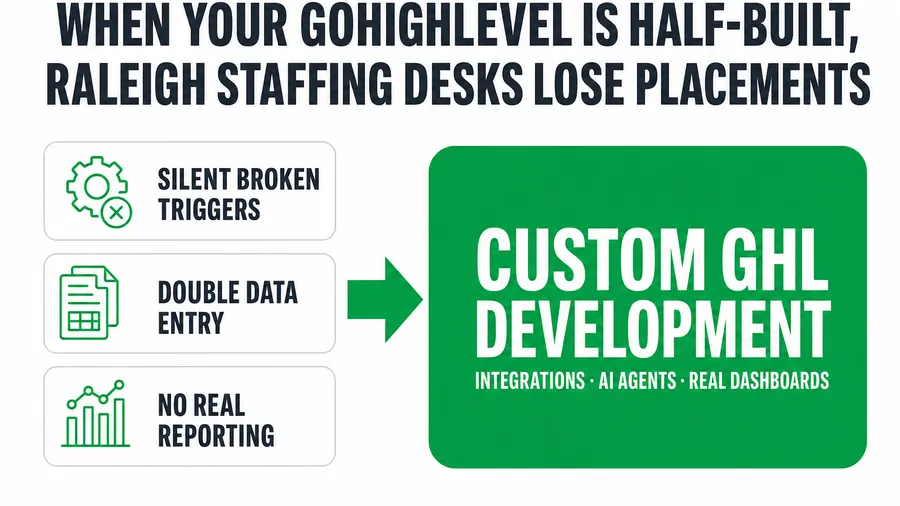
If you’re not sure which side of the line you’re on, that’s exactly what a scoping call is for. And if the answer is “not custom software yet, but your GHL setup is a mess,” our GoHighLevel development service fixes the configuration without a ground-up build.
How to start without ripping everything out
The fear is a big-bang migration that halts placements for a quarter. That’s not how a good build works. The sane path:
- Map the desk, not the software. Document how candidates and requisitions actually move, where the re-keying happens, and which report you fake every month. The costliest sprawl is usually in one or two workflows.
- Scope tight, price fixed. A real build comes back as a written scope with milestones, a fixed price, and a timeline — not an open-ended hourly meter. Weekly demos keep it honest.
- Integrate before you replace. Often the first win isn’t a new system — it’s a portal or an integration layer that unifies the tools you already have. Keep your system of record; kill the re-keying around it.
- Roll out one workflow at a time. Ship the highest-cost pain first (usually the client portal or the unified candidate record), prove the time saved, then expand. You own the code at every step, so nothing traps you.
Done this way, custom software doesn’t stop the desk — it takes the shadow job off it, one workflow at a time, until your recruiters are back to doing the only work that bills: talking to candidates and clients.
Frequently asked questions
Do Seattle staffing agencies really need custom software, or is an ATS enough?
For many desks, a well-configured ATS or a GoHighLevel snapshot is enough — and cheaper and faster to deploy. Custom software earns its keep when your process is specific enough that recruiters spend real time working around the tools, when per-seat fees climb as you grow, or when you need a portal or workflow no vendor sells. Below that threshold, configure; above it, build.
What does “disconnected tools” actually cost my desk?
It shows up as bad data (Gartner puts the average cost of poor data quality at $12.9M/year per organization), lost recruiter hours (workers lose nearly 9% of the workday just toggling between apps, per Harvard Business Review), and slower time-to-fill (integrated teams fill roles about 32% faster than disconnected ones, per Pin’s 2026 report). None of it is itemized on your P&L, which is exactly why it’s easy to ignore.
Is custom recruiting software expensive?
Every build is scoped and quoted individually because no two agencies need the same thing. Smaller internal tools and integrations start lower; a full custom ATS or SaaS product scales from there. Unlike per-seat software, you pay once, own the code, and add as many recruiters as you want with no per-user tax. The fastest way to a real number is a scoping call.
Can you connect to Bullhorn, JobAdder, Loxo, or Ceipal instead of replacing them?
Yes. If your system of record works, we build an integration and portal layer on top — unifying your data and killing the re-keying — rather than forcing a rip-and-replace. Replacement only makes sense when the boxed product is actively fighting how you recruit.
Do I own the software you build?
Yes — full IP transfer, you own the code outright, and there’s no per-seat billing. That’s the core difference from off-the-shelf tools: you’re building an asset you own and can extend forever, not renting features that disappear the day you cancel.
We’re not ready for custom software. What’s the fast alternative?
Start with a done-for-you GoHighLevel snapshot and a fast prebuilt website. It gives you candidate capture, automated interview scheduling, no-show reminders, and TCPA-ready consent in days, not months — and it’s a clean foundation to build custom software on later if you outgrow it.
About the author
Marcus Delgado is the Staffing Agency Growth Lead behind the Hiring Snapshot, based in Tampa, FL. He ran a light-industrial staffing desk before joining the snapshot team to focus on agency growth. He thinks in placement economics — fill rates, redeploys, gross margin per requisition — and translates those numbers into the systems that actually move them. His posts lean on real desk math, not vanity metrics.
Related reading
- Build a GoHighLevel ATS & Recruiting Pipeline: The Full Setup
- How to Reduce Time-to-Fill: The 2026 Playbook for Staffing Desks
- GoHighLevel vs. Bullhorn for Staffing Agencies: An Honest Comparison
- Staffing Industry Benchmarks 2026: The Numbers That Matter
- Astro vs. GoHighLevel Websites for Dallas Staffing Agencies: Page Speed Compared
Tired of paying recruiters to fix disconnected tools? See our custom software builds, get a fixed-price quote, or see how the Hiring Snapshot works if you’d rather start with a done-for-you GoHighLevel setup.